The Official Referee & Captain Guide to Match Toss Protocols in Traditional Sports and Competitive Esports
Explore the rules and protocols for official captains coin tosses across soccer, cricket, football, pickleball, and esports, including first serve, side selection, and overtime calls.
Chief Referee Marcus Vance, Tournament Operations Specialist
Published on 2026-08-22
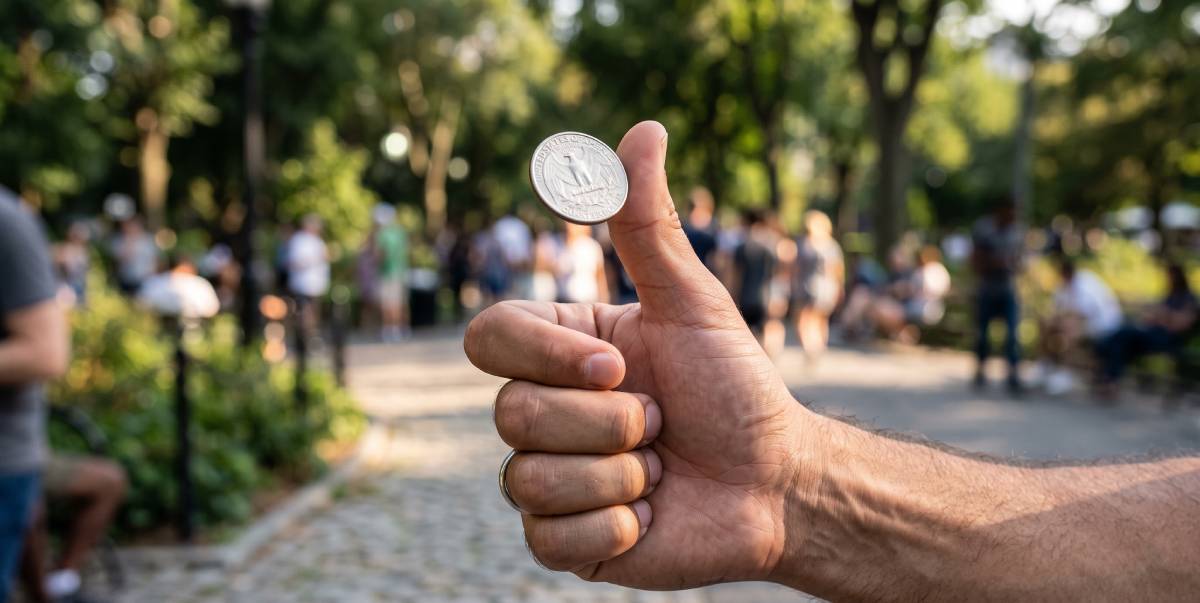
The Standard of Integrity at Center Court
Fair play begins before the first whistle. In every sanctioned sporting competition and professional esports league, the pre-match coin toss represents the impartial foundation upon which competitive integrity is built. A crisp, properly executed toss reassures both competitors that the competition is governed by strict rules, fair officiating, and absolute neutrality.
However, when referees bungle the procedure—catching the coin awkwardly, mishearing calls in noisy stadiums, or allowing captains to delay decisions—controversy immediately follows. This guide outlines the official protocols mandated by global governing bodies (FIFA, NFL, ICC, ITF, USAP) and esports tournament administrators.
1. The Four Golden Rules of the Match Official Toss
Certified referees follow a standardized four-phase protocol at the captain's meeting:
-
1. Pre-Toss Presentation & Verification:
The referee must visually present both sides of the coin to both team captains simultaneously, explicitly stating: "Captains, this is Heads, and this is Tails." This eliminates post-toss claims that the coin featured ambiguous commemorative artwork or non-standard faces. -
2. Designated Caller Identification:
In traditional sports, the visiting team captain is universally designated to call the toss. The referee must point directly to the visiting captain and announce: "Visiting captain, your call in the air." -
3. Audible Call While Airborne:
The call must be made while the coin is actively rotating in the air. If the captain fails to call before the coin begins its downward descent, the referee must immediately declare a dead toss, catch the coin cleanly in the air, and repeat the procedure. -
4. Unobstructed Ground Landing:
In sanctioned competition, the referee must allow the coin to fall naturally to the turf, court, or field. Catching the coin and slapping it onto the back of the hand is strictly prohibited in international matches because it introduces hand manipulation variables.
2. Historic Controversies and Why Protocols Exist
Strict coin toss protocols were forged in the crucible of real-world controversies:
The 1998 NFL Thanksgiving Day Incident
During the Thanksgiving game between the Pittsburgh Steelers and Detroit Lions, referee Phil Luckett conducted the overtime coin toss. Steelers captain Jerome Bettis began to say "Heads-Tails," and Luckett awarded the Lions possession believing Bettis called "Heads" when the coin landed Tails. The Lions received the ball and scored immediately to win.
This debacle resulted in the modern NFL protocol: the referee must ask the visiting captain for their call BEFORE the coin leaves the referee's hand, repeating the call over the stadium microphone for the entire crowd to hear.
The 2011 Cricket World Cup Final Toss Confusion
At the 2011 ICC Cricket World Cup Final in Mumbai between India and Sri Lanka, crowd noise from 33,000 screaming fans drowned out Sri Lankan captain Kumar Sangakkara's call. Match referee Jeff Crowe could not hear the call, requiring an awkward televised re-toss. Ever since, ICC match referees stand within inches of the captains and require visual hand signals alongside verbal calls.
3. Sport-Specific Regulatory Codes
Official governing bodies codify coin toss rules within their statutory rulebooks:
Soccer (IFAB Law 8.1 - Start and Restart of Play)
The toss is conducted between both captains. The team that wins the toss decides which goal to attack in the first half or to take the kick-off. Depending on that choice, the other team takes the kick-off or decides which goal to attack in the first half. The teams change ends for the second half.
Cricket (ICC Standard Test & ODI Playing Conditions Clause 1.3)
The captains must toss a coin for the choice of innings, in the presence of the ICC Match Referee, not earlier than 30 minutes and not later than 15 minutes before the scheduled or rescheduled time for the start of the match. The decision to bat or field cannot be altered once communicated to the referee.
Pickleball (USA Pickleball Rule 4.A.1)
A coin toss or any other fair method determines choice of serve, receive, or end. The winner of the toss has the option of choice of serve, receive, or side. If the winner chooses serve or receive, the loser chooses side, and vice versa. The winner may also defer their choice to the opponent.
4. Overtime & Penalty Shootout Toss Protocols
When regulation play ends in a deadlock, coin toss mechanics trigger once more, but with vital procedural nuances:
- Soccer Shootouts (IFAB Law 10.3): Referees conduct two separate coin tosses. Toss #1 decides which goal will be used for all kicks (vital when one goal faces the home supporter terrace or evening sun). Toss #2 decides which team kicks first or second.
- NFL Overtime Playoff Rules: Following the 2022 postseason amendments, both teams are guaranteed at least one offensive possession in overtime. The toss winner typically elects to receive, but electing to kick offers sudden-death knowledge if the first team fails to score.
5. Youth and Interscholastic Protocols (NFHS Standards)
In high school athletics under the National Federation of State High School Associations (NFHS), the pre-game conference goes beyond the flip:
- Mandatory Head Coach Attendance: Head coaches must accompany captains to center field to verify all student-athletes are legally equipped and have reviewed the NFHS Sportsmanship Pledge.
- Conduct Warnings: Referees explicitly outline the bench conduct policy, technical foul limits, and captain communication responsibilities before the coin is shown.
6. Esports Protocols: Map Vetoes and Side Selection
In competitive esports championships (ESL, BLAST, Riot Games), the toss dictates the Pick/Ban veto phase:
- Higher Seed Privilege: In early rounds, the higher-seeded team is frequently granted automatic toss-winner status.
- Coin Flip Priority: In grand finals or equal-seed matches, a certified coin flip awards Team A the choice of "Team A bans first" or "Team A selects starting side on Map 1."
- Commit-Reveal Schemes: High-tier online tournaments utilize cryptographic hash matching: Team A chooses a private secret hash, Team B calls an integer, and the outcome is mathematically verified on a shared ledger.
7. Conducting Neutral Remote Tosses with BracketEngine
For community organizers, club ladders, and online tournaments, conducting fair flips without disputes is easy. Use our neutral Interactive 3D Coin Toss Tool to screen-share a physics-modeled, cryptographically secure coin flip with verified Heads and Tails outcomes.
Share This Tournament Guide
Found this helpful? Share with your players, coaches, or league group:
Ready to Build Your Tournament Bracket?
Create, customize, seed, and print high-resolution single elimination, double elimination, and round robin brackets in seconds.